Documented Screening Case Studies
Each article examines a concrete testing paradox: how slight boundary adjustments or collinear filter additions radically reshape output populations.

One Threshold Changed the Entire Result Set
Examining how adjusting a single threshold shifted the baseline distribution and compressed candidate volume across sample spaces.

Same Condition, Different Universe
Testing identical logic across liquid large-cap and broader unconstrained pools showed diverging survival patterns.

The Daily Filter Passed but the Weekly One Did Not
Investigating temporal aggregation mismatch where end-of-period bar sampling contradicted intraday qualification triggers.

Two Conditions Were Measuring Almost the Same Thing
Quantifying covariance between collinear momentum criteria that created false confidence in parameter selectivity.

Why Adding More Filters Did Not Improve the Research Question
Analyzing cumulative condition drag where incremental screening rules introduced noise rather than structural clarity.

The Result Set Shrunk, but Information Did Not Improve
Demonstrating how severe dataset compression produced survivor bias without elevating statistical uniqueness.
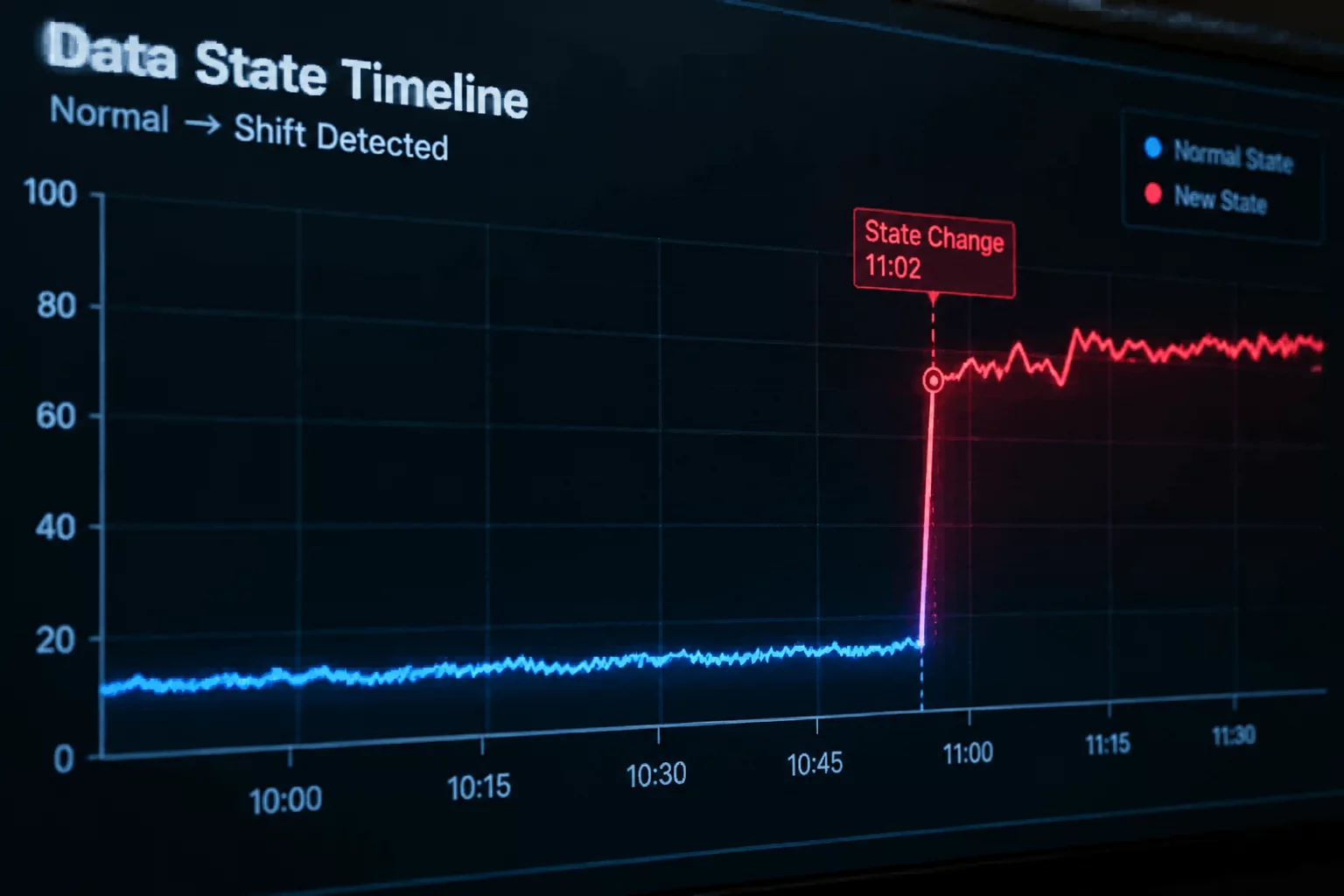
A Condition Was True Now but Not Three Bars Ago
Evaluating state instability and lag artifacts when calculating rolling historical condition benchmarks.

The Universe Changed Before the Condition Did
Tracking look-ahead drift and point-in-time constituent shifts that distort multi-period screening outputs.
Parameter Sensitivity Briefings
Periodic empirical briefs reviewing condition formulation, universe adjustments, and quantitative testing methodology.