Pinpoint the Exact Dropped Factor
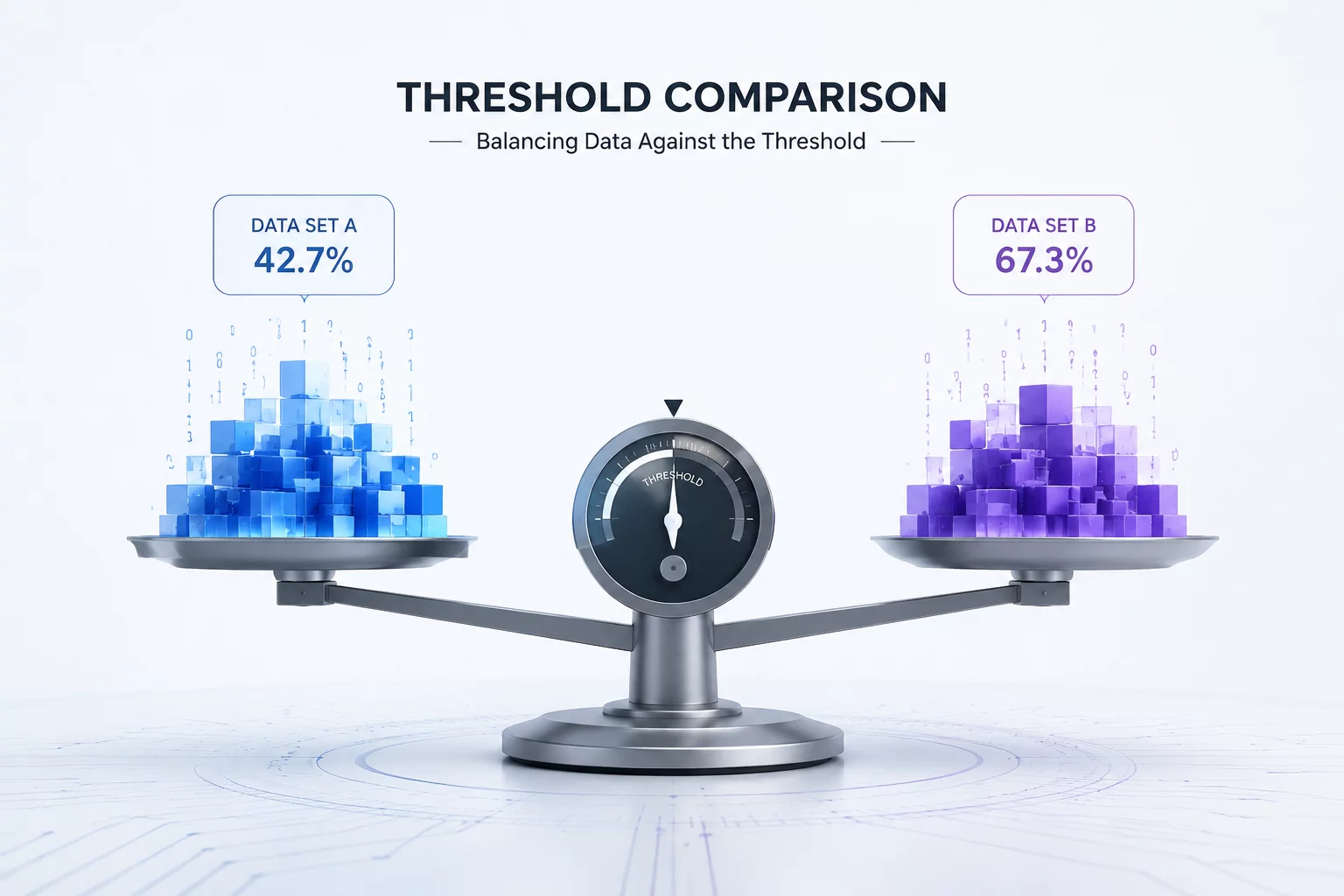
Identify the precise threshold parameter responsible for eliminating specific records from your sample, replacing ambiguous multi-variable confusion with explicit causality.
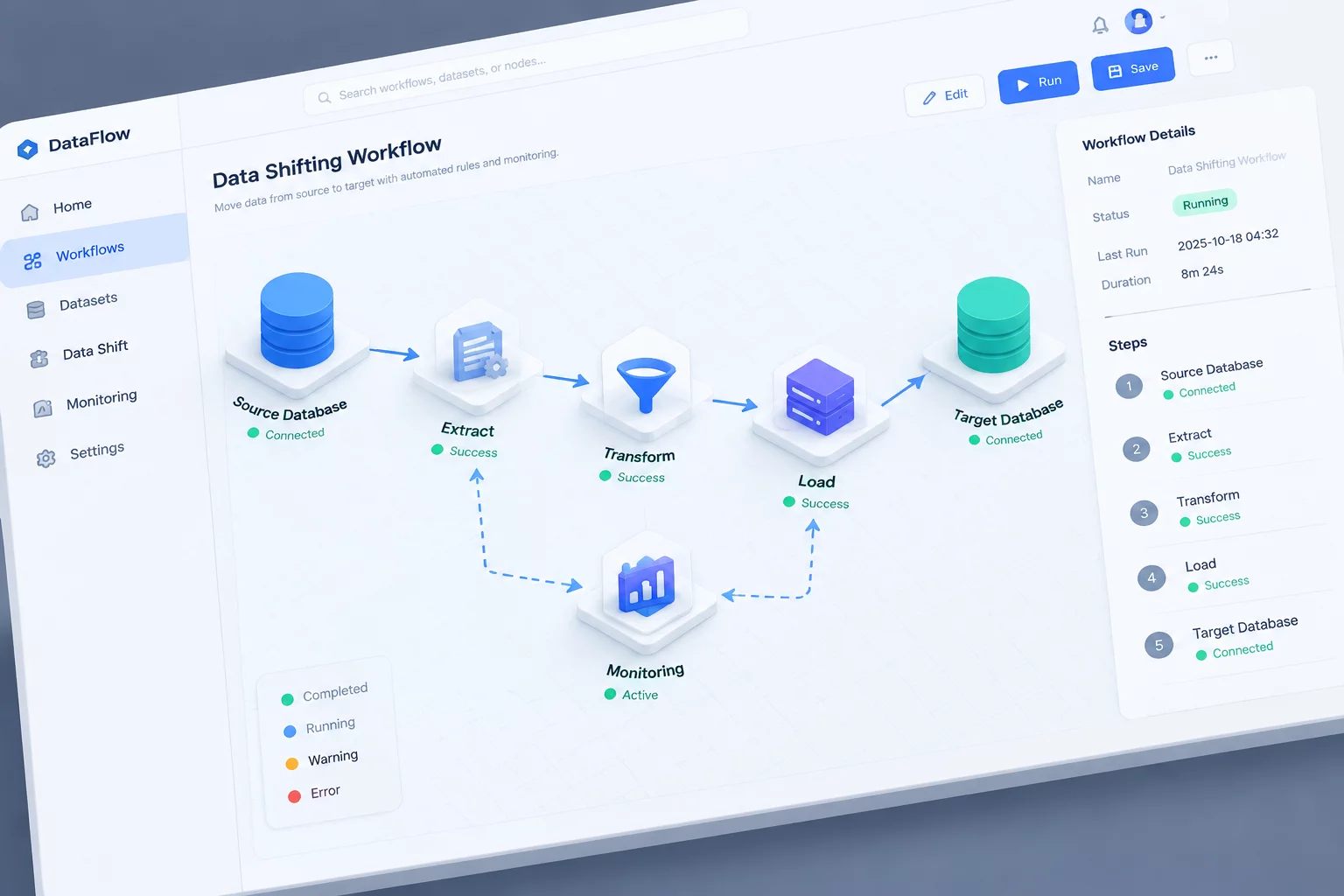
Explore research cases about universes, thresholds, timeframes, redundant conditions, and result-set changes without treating a screen as a recommendation.
Which assumption actually changed the result set?
Screening workflows fail when condition changes produce untracked shifts. Our structured criteria framework delivers distinct empirical results for analysts and researchers.
Identify the precise threshold parameter responsible for eliminating specific records from your sample, replacing ambiguous multi-variable confusion with explicit causality.
Recognize immediately when two separate filtering criteria measure the exact same underlying distribution, maintaining a lean and defensible research methodology.
Determine conclusively whether result contraction occurred because the broad universe changed composition or because your internal condition threshold narrowed.
Document what entered and what vanished between screening iterations with auditable change logs, establishing evidence-backed documentation for every working hypothesis.
Each case study documents what appeared, what vanished, and why shifting one baseline parameter transformed the empirical universe.
Research question: Which symbols currently meet a defined combination of liquidity and trend conditions? The result set is not the story — the shift is.
A strict boundary shifted baseline inclusion by 64 percent, revealing how minute sensitivity assumptions dominate downstream cohorts.
Applying identical liquidity filters across separate indexing definitions yielded completely opposing attrition behaviors.
Examining temporal aggregation bias where moving average criteria aligned on daily sampling but broke under weekly calculations.
A quantitative inspection of filter collinearity where adding an extra criterion only compounded exclusion noise without diagnostic clarity.
How progressive screening layers frequently conceal foundational premise errors instead of isolating meaningful causal cohorts.
A documentation audit showing that severe candidate contraction did not enhance statistical signal, but merely amplified survivorship bias.
Every entry documents a Criteria Shift Map: Starting Universe → Base Condition → One Changed Assumption → New Result Set → What Disappeared / Appeared → Research Question.
Complete before/after cases showing exactly what one changed assumption did to the list.
BoundaryOne threshold, two result sets — and an audit of the difference.
CohortOne criterion applied across different universes, compared side by side.
TemporalSame logic, different timeframe — where identical rules disagree.
InteractionWhen two filters change each other's meaning inside one screen.
OverlapConditions that add almost nothing once the base rule is applied.
- RESEARCH WORKBENCH -
Systematic screening engines built to isolate which parameter modification altered your cohort universe.
Map universe transitions step-by-step from base conditions to altered filters, highlighting entity attrition.
Stress-test individual filter parameters to evaluate whether criteria changes reveal real insights or noise.
Direct side-by-side comparison of baseline versus modified conditions across multi-variable boundaries.
Single-sentence clarifications designed to make analytical screening logic transparent to beginners.
The initial bounded population of records before any condition or threshold is applied.
The primary baseline rule that serves as the benchmark for subsequent comparison tests.
The intentional alteration of exactly one parameter to isolate its specific impact on the output.
The exact subset of items excluded exclusively because of the changed rule.
New records that qualified only after relaxing or adjusting the investigated condition.
A secondary parameter that mimics an existing constraint without adding new informational specificity.
A state where a rule passes on daily resolution but fails when measured against weekly data intervals.
The precise query asking which assumption created the resulting set difference.
Explore comprehensive assumption breakdown in our research guides.
Industry citations and analytical notes examining our methodology for evaluating how a single parameter change reshapes universe screening datasets.
“CriteriaShift Atlas demonstrates how substituting a single accounting proxy can silently eliminate forty percent of a candidate universe without triggering standard warnings.”
“The framework treats each condition shift not as a selection mechanism, but as a controlled causal stress test on dataset integrity and assumption drift.”
“The step-by-step shift mapping clearly documents how adding closely correlated filters creates the illusion of specificity while merely reducing sample depth.”
Our research isolation framework examines how single assumption changes transform universe cohorts across specialized calculation engines, temporal database schemas, and attribution pipelines.
Extracts Personal Criteria Formulas, deconstructs nested boolean statements, and reveals where redundant filter overlaps cause artificial record dropouts.
Prevents survivorship anomalies by locking exact historical constituents prior to condition application, checking whether the universe moved before the rule did.
Calculates set differences between Base Condition outputs and single shifted variables, classifying disappearing records and newly qualified items objectively.
A systematic protocol for tracking how parameter adjustments diminish or expand cohort sizes. Every tool in our stack references this standard to document which assumption actually changed the result set.
Before integrating third-party screening engines or hiring computational workflow contractors, stress-test their methodology against assumption drift, survivorship bias, and opaque logic.
Contractors must prove that historical universe queries faithfully reflect delisted entities, historical index constituents, and past corporate restructurings on the exact bar date being evaluated, without backfilling surviving entities into past cohorts.
Review our detailed guide on maintaining analytical neutrality. Understand why separating deterministic screening rules from evaluative conclusions is vital when assessing third-party quantitative contractors.
Need Custom Audit Verification?
Audit criteria shifts across external workflow suites.